

The incoming change to the rent increase mechanism under the Renters’ Rights Act, taking effect on 1st May, represents one of the most significant shifts in the private rental sector in recent years. While not explicitly framed as a “rent cap”, there are many, experienced players, within the industry, who view this aspect of the reforms as introducing indirect control; effectively a “cap via the back door.”
At the centre of the change is the move to a more formalised, evidence-based approach to rent increases. Landlords will now be required to justify any uplift through a process that increasingly resembles a desktop valuation. This introduces both structure and scrutiny, but also raises practical challenges, particularly when dealing with properties that do not conform neatly to standard comparables.
“Boutique” or high-specification properties are likely to feel the greatest impact. These homes often command a premium, based on finish, design, or unique features that are inherently subjective and difficult to quantify against local market data. In a system that leans heavily on comparables and documented evidence, capturing that premium becomes far more complex, potentially leading to downward pressure on achievable rents in this sector.
For self-managing landlords, the administrative burden will increase considerably. Rent increases must now be served exclusively via Section 13 notices, which, while long-established, can be procedurally confusing and unforgiving if completed incorrectly. Errors may invalidate the notice entirely, delaying income adjustments and creating further operational strain for those without professional support.
Perhaps the most consequential change lies in the unbalanced nature of the outcomes themselves: From six months into a tenancy, tenants will have the ability to challenge proposed rent increases. The First-tier Tribunal (FTT) will no longer have the authority to increase rents beyond the proposed level—only to maintain or reduce them. This fundamentally shifts the risk dynamic. Landlords proposing an increase now face the possibility of achieving less than their current rent, not more.
EVIDENCE IS KEY...
Compounding this is the introduction of a rent freeze during the tribunal process. While a case is under review, the rent remains at its existing level, potentially for many months. This delay in implementation can disrupt cash flow, particularly for landlords operating with tight margins or those servicing commercial lending arrangements where income consistency is critical.
The reforms also come at a time of rising compliance costs, placing further pressure on landlords who may not have adjusted rents in line with market movements over recent years. For these landlords, the combination of increased regulation, capped flexibility, and delayed income adjustments may prove particularly challenging.
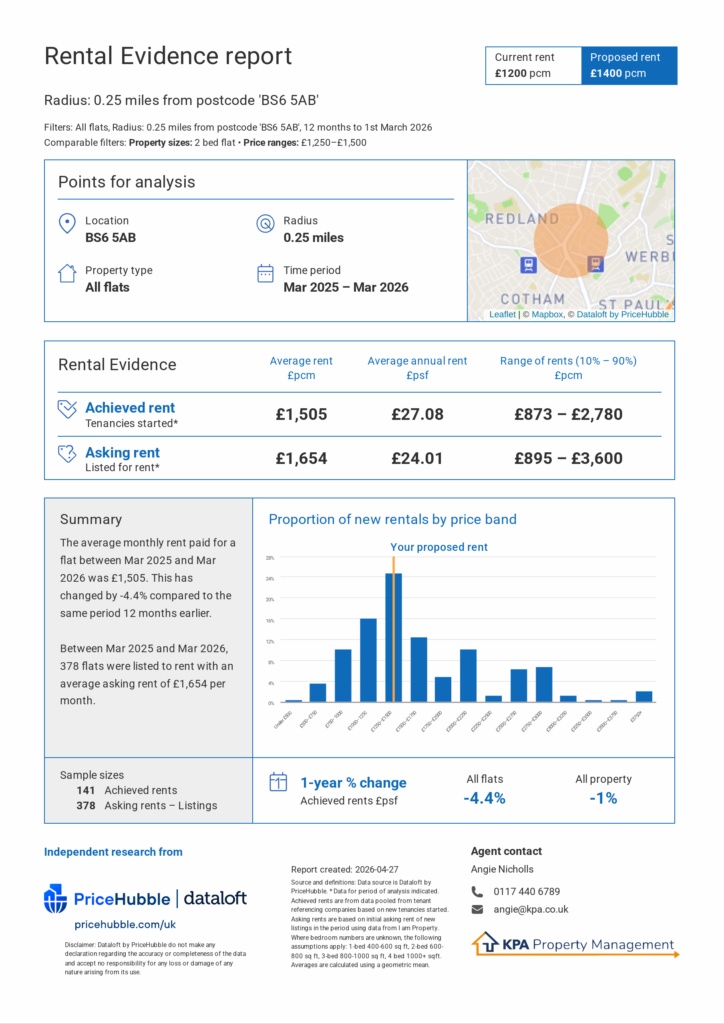
In this new environment, preparation and documentation will be key. Rent increases must be robustly supported by evidence – market comparables, demand levels, listing performance, and professional advice all will play a part. Here, in the agency, we have already adapted our processes, by producing detailed evidence, which draws data from various third party sources, to accompany Section 13 notices, effectively “stacking” justification in anticipation of scrutiny or challenge.

now is the time to overhaul your processes!
Ultimately, while the reforms aim to create fairness and transparency, they introduce a more cautious and, in many ways, constrained rental market. Landlords who adapt quickly, by embracing data, process, and professional guidance, will be best positioned to navigate the changes successfully.
As always, if we can assist, or you have queries, comments or questions and would like a chat, then reach out; we are always happy to help!


